
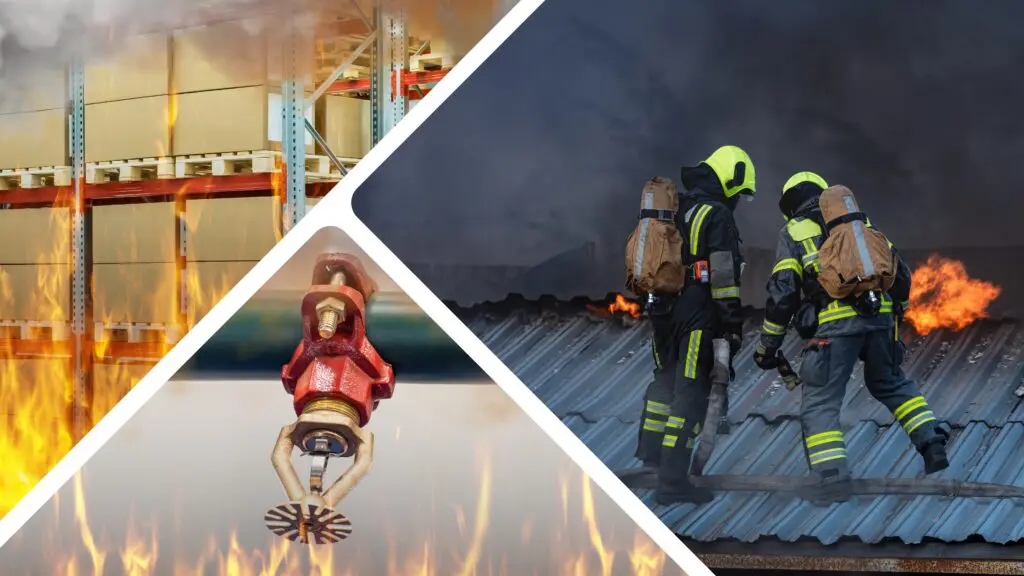
When consumers need something, they want it quickly. This demand and increased competition have forced companies to evolve their warehouse procedures, even if proper fire protection is sacrificed. According to Industry Research, over 60% of U.S. warehouses utilize automated storage and retrieval systems (ASRS) in some capacity. Unfortunately, the evolution of technology leaves room for potential loss of life and property. This article will cover the different types of storage systems warehouses utilize and how that affects their Fire and Life Safety practices.
Understanding Storage Systems
Since the inception of warehouses, multiple-row racks have been considered the gold standard for warehouse operations. This traditional system, as defined by Flue Labels, occurs when a storage rack is more than 12 feet in depth or has less than 3.5 feet of aisle separation, resulting in an overall depth greater than 12 feet.
Simply put, an ASRS utilizes computer-controlled systems and robotic devices to store and retrieve items from warehouses when needed. Tianjin Master Logistics Equipment explains ASRS works by:
- Scanning and placing goods into ASRS
- Transporting goods to their locations via cranes or shuttles
- Retrieving the items automatically once an order is received
- Utilizing conveyors or automated vehicles to send goods to packing stations
Many companies prefer ASRS over traditional systems because they maximize space, work efficiently, and require less human intervention. In addition to this, these machines are less likely to make errors.
Unique Fire Risks in ASRS and Multiple-Row Racks
While there are several advantages to utilizing an ASRS, there are also new fire hazards to consider. The National Fire Protection Association (NFPA) cites several of these, including high storage densities, greater storage heights, and limited firefighter access. These individual risks can be heightened depending on the commodity type, storage configuration (plastic totes, open-top containers, plastic bins), system type (top-loading, mobile racks, side-loading, stacker cranes, mini-loading), and energy source.
While it may seem like ASRS pose a large number of fire risks, they’re not alone, as multi-row racks have problems of their own. AmRisc Group says these systems are also problematic due to their vertical configuration and dense concentration of combustible materials, which can accelerate fire spread and increase heat intensity. Since multi-row rack storage requires manual intervention, aisles often become blocked, facilitating horizontal fire movement. Idle pallets are considered hazardous because of their flammability and shape. If solid shelving is in use, it may hinder the effectiveness of sprinklers by blocking water from reaching the fire.
Fire Protection System Requirements
When it comes to protecting warehouses from loss of life and property, installing sprinklers and placing high-flow extinguishers near hazards is a no-brainer. However, there are other precautions to consider even at the warehouse’s design stages. Below are key clearance and aisle provisions from NFPA via East Coast Storage Equipment:
- Keep a minimum of 3 inches between pallets.
- Dead-end aisles must not exceed 50 feet in length.
- Maintain 3 inches of transverse flue space between racked pallets.
- Ensure 6 inches of longitudinal flue space between loads or back-to-back rows.
- Provide an unobstructed aisle width of at least 24 inches or half the aisle width for standard restocking.
- Ensure a minimum of 44 inches unobstructed for mechanical restocking or 24 inches for standard restocking operations.
- Maintain at least 18 inches of clearance for standard sprinklers, 36 inches for Early Suppression, Fast Response (ESFR) sprinklers, or 24 inches for no sprinklers at all.
As can be assumed, these are just the baseline standards that warehouses must follow and shouldn’t be the only Fire and Life Safety precautions taken, especially considering the unique risks that ASRS and multi-row racks present.
Comparative Analysis: Fire Protection Strategies
Protecting life and property isn’t one-size-fits-all, but rather a customized approach that takes multiple factors into account, with storage system type being one of them. For example, the main advantages of ASRS are indeed space maximization and operational efficiency. However, their increased storage density and limited manual access can cause complications for matters as simple as system maintenance and severe as emergency response. These weak points listed above are the strong suits for multi-row rack warehouses, which benefit from easier firefighter access and established suppression methods. On the downside, their open aisles and manual operations can lead to blocked passageways and a greater risk of human error. While both approaches can be made compliant with fire codes, each requires a layered fire protection strategy that considers the unique dangers and operational realities of the storage system in use.
ASRS Warehouses
Warehouses equipped with ASRS are often outfitted with advanced detection systems that can accommodate the presence of robotics, conveyor systems, and tightly packed goods. For example, the Kidde Commercial ModuLaser system features scalable, multi-channel aspirating smoke detectors that are easy to install and expand, thanks to its flexible modules and backplane design. With patented ClassiFire AI, ModuLaser automatically adapts to environmental changes, minimizes false alarms with advanced dust discrimination, and ensures reliable early fire detection while streamlining maintenance.
Another option is the Xtralis air-aspirating VESDA series, which continues to impress industry professionals worldwide. As market leaders in early detection, they constantly sample the air to provide the earliest warning of any issues. Their multi-level warnings and sensitivity range enable them to detect the most minimal traces of smoke. More advanced models in the series are even capable of detecting hazardous and combustible gases.
Aside from installing specific systems, Marsh recommends replacing fluorescent lights with LEDS, avoiding combustible insulation, conducting ASRS infrared scans regularly, and keeping portable appliances at least two meters away from ASRS for extra protection. Considering all of this with ASRS can drastically reduce the risk of losing life and property. For warehouses that contain multi-row racks, there are other unique challenges to overcome.
Multi-Row Rack Warehouses
In comparison, multiple-row rack warehouses typically rely on in-rack sprinklers in addition to standard ceiling-level sprinklers. As stated by the NFPA, warehouses are one of the few places where sprinklers can be found at the ceiling level as well as in racks closer to ground level. By laying them out in this manner, water from the racks can reach a fire before it expands far beyond the system’s capabilities.
For the in-rack sprinklers to work, the critical component known as flue space must be maintained. Defined by Rack Safety Products, longitudinal flue space is the gap between back-to-back pallet racks that prevents blockage. This ensures that dislodged products don’t obstruct the flue. Maintaining 3 inches of transverse flue space and 6 inches of longitudinal flue space allows heat to rise and water from the in-rack sprinklers to flow down, suppressing fires at their source.
The space requirements don’t end there for multi-row rack warehouses. Their aisle width must be a minimum of 12 feet. By having greater accessibility, traditional suppression and firefighting methods can take over. However, this is of no use without strict adherence to aisle clearance and flue space guidelines. That’s why Speedrack Midwest recommends adding passive protection methods, such as fire barriers and draft curtains, to help control the fire even further.
For both warehouse types, there’s no harm in meeting with the local fire department early in the design process to integrate firefighter access features and review extinguishment plans. That way, you can feel confident in your warehouse practices, regardless of the type of storage chosen.
Conclusion
In today’s evolving warehousing landscape, prioritizing Fire and Life Safety is as vital as ever. By understanding the risks associated with each storage method and implementing tailored, code-compliant protection strategies, companies can safeguard life and property to the fullest extent. Staying connected with an experienced Fire Service Company ensures you’re up to date with regulatory requirements and technological advancements. Doing just that will foster a safe and resilient warehouse environment for years to come. Click here to learn more about best practices for preventing and managing warehouse fires.
Image via Shutterstock.